The International Higher Institute for Media was established by Ministerial Decree No. 1216, issued on 9 June 2009.

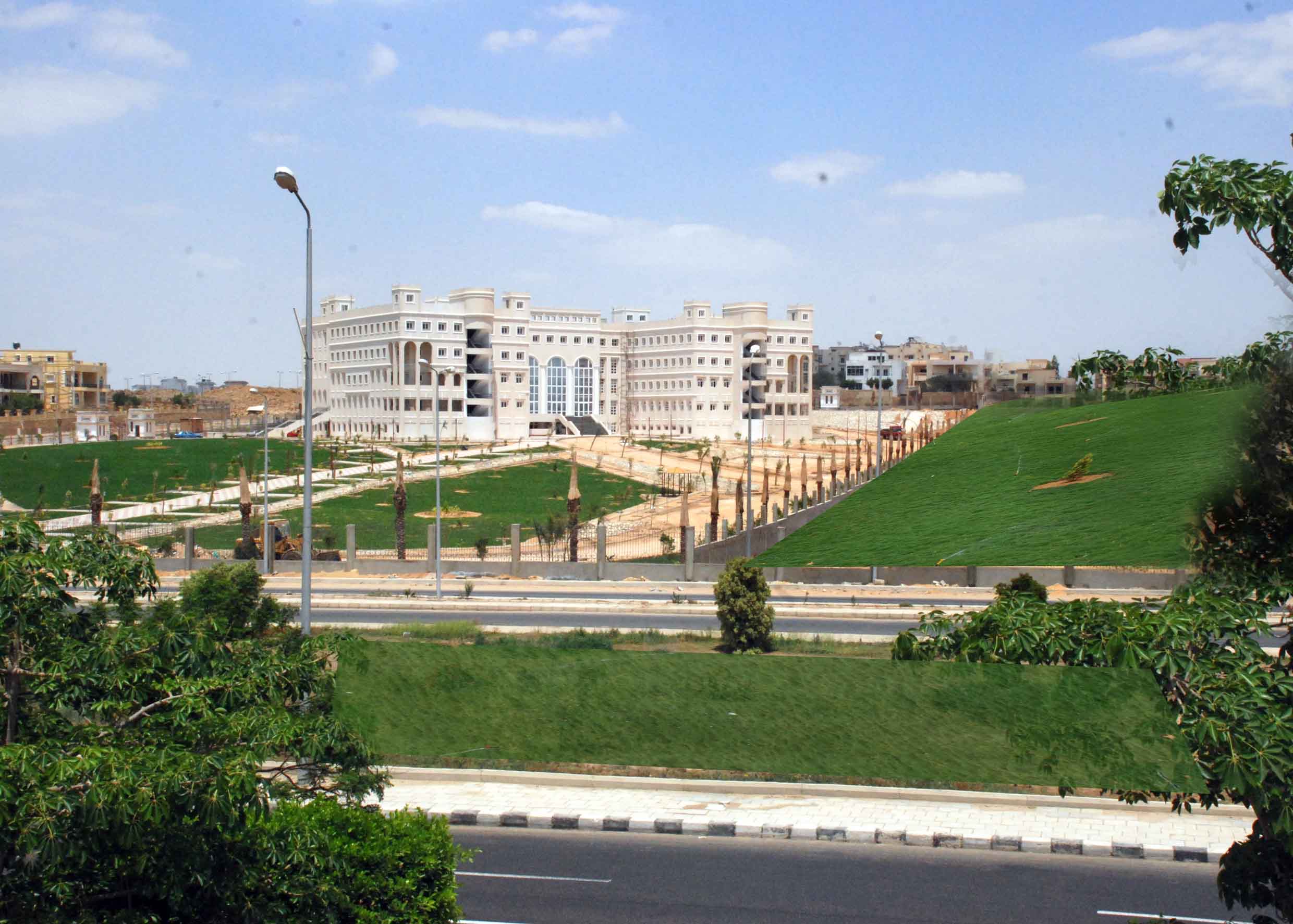
The Institute is located in El Shorouk City on an area of 50,000 square metres, providing a distinguished university campus equipped with landscaped gardens and high-standard sports facilities.

The Institute's main building covers approximately 10,000 square metres and includes a large number of classrooms, studios equipped with the latest technologies, a theatre, and a conference and events hall with a capacity of approximately 500 persons.

The Institute admits holders of the General Secondary Education Certificate in both the Science and Arts streams, or equivalent Arab and foreign certificates.

The Institute began implementing the credit-hour system as of the 2024/2025 academic year, as part of its efforts to develop its educational system and keep pace with modern academic systems.
Academic Departments

The Institute comprises three academic departments:

  • Department of Multimedia Journalism
    Students acquire skills in writing and editing for both print and electronic newspapers, in addition to journalistic layout and advertising design.
  • Department of Digital Radio and Television Production
    Students acquire skills in radio and television production, in addition to preparing and writing radio and television reports.
  • Department of Public Relations and Digital Marketing Communication
    Students acquire skills in advertising campaign management, electronic marketing principles, public relations, and advertising design.

The duration of study at the Institute is four years, after which graduates are awarded a bachelor's degree in one of the aforementioned specialisations.

Students select one of the academic specialisations offered by the Institute after successfully completing the second academic year.

Instruction at the Institute is delivered in Arabic. The Institute also places considerable emphasis on the English language and focuses on practical training and professional practice within its academic courses.

The Institute obtained academic accreditation from the National Authority for Quality Assurance and Accreditation of Education under Accreditation Decision No. 227, dated 26 July 2023.

The Institute also obtained the international ISO 9001:2008 Quality Management System Certification in August 2009.

The Institute employs a distinguished group of appointed and seconded faculty members from various Egyptian public universities, in addition to a highly competent and experienced administrative staff.

The Institute also includes distinguished members of the assistant academic staff and provides them with financial and moral support to complete their postgraduate studies and become future members of the Institute's faculty.

The Institute witnessed the graduation of its first cohort of students in the 2012/2013 academic year.

Institute Vision

To achieve continuous improvement in the quality of education, scientific research, and community engagement, and to qualify competent graduates with scientific and innovative capabilities that meet the needs of the media labour market at the local, regional, and international levels.

Institute Mission

To provide distinguished educational, research, and community services at a level of quality that responds to local, regional, and international developments, and to prepare and qualify competent graduates who are committed to national issues, professional ethics, and social responsibility, thereby gaining the confidence of society and meeting the requirements of digital media.

Strategic Goals of the Institute

  • First Goal: Continuous Improvement of All Aspects of the Educational Process in Accordance with the Relevant Reference Standards.
    • Objective One: To develop academic programmes in accordance with scientific developments and labour-market needs.
    • Objective Two: To develop teaching and learning strategies and assessment methods.
    • Objective Three: To enhance the capabilities of human resources and improve the efficient use of physical and technological resources.
    • Objective Four: To develop student activities and provide all forms of student support.
    • Objective Five: To conduct continuous evaluation and improve performance in order to strengthen the Institute's competitive position.
  • Second Goal: Developing the Institute's Research Capacity in the Production of Scientific Knowledge.
    • Objective One: To enhance research productivity and ensure that research is aligned with future trends.
    • Objective Two: To promote innovative scientific research and encourage international publication.
    • Objective Three: To link scientific research with sustainable development programmes and community service.
  • Third Goal: Strengthening Communication with Community Stakeholders in Order to Gain Public Confidence.
    • Objective One: To increase communication with media and service institutions.
    • Objective Two: To conduct regular monitoring and evaluation of the community service plan.
    • Objective Three: To play an effective role in crisis management and in responding to epidemics.
    • Objective Four: To strengthen the links between the Institute, its graduates, and employers.